The engine room of a 1933 coal-fired icebreaker, photographed from the operator’s side of the machine.
The steam icebreaker Stettin was launched in 1933 by the Stettiner Oderwerke shipyard, on the Oder River in what was then Germany (now Szczecin, Poland). Each winter she broke ice to keep shipping moving on the Oder between Stettin and the Baltic at Swinemünde. After 1945 she worked the Elbe for the Hamburg waterways authority until 1981. She was then rescued from the scrapyard and is now a protected technical monument, berthed at the Museumshafen Oevelgönne in Hamburg. She remains one of the largest coal-fired steam icebreakers still in operation.
Below decks, two coal-fired boilers feed a triple-expansion steam engine of 2,200 horsepower. Her power was never automated. Stokers shovelled coal by hand, an engineer read the gauges and answered the bridge telegraph, and oilers worked their way around a moving engine with hand cans. These photographs come from the operator’s side of that system: the controls, tools and surfaces that the human body was designed into.
Available light only, with no flash and with minor dodging and burning. Photographed with the written permission of the ship’s owners, Dampf-Eisbrecher Stettin e.V.
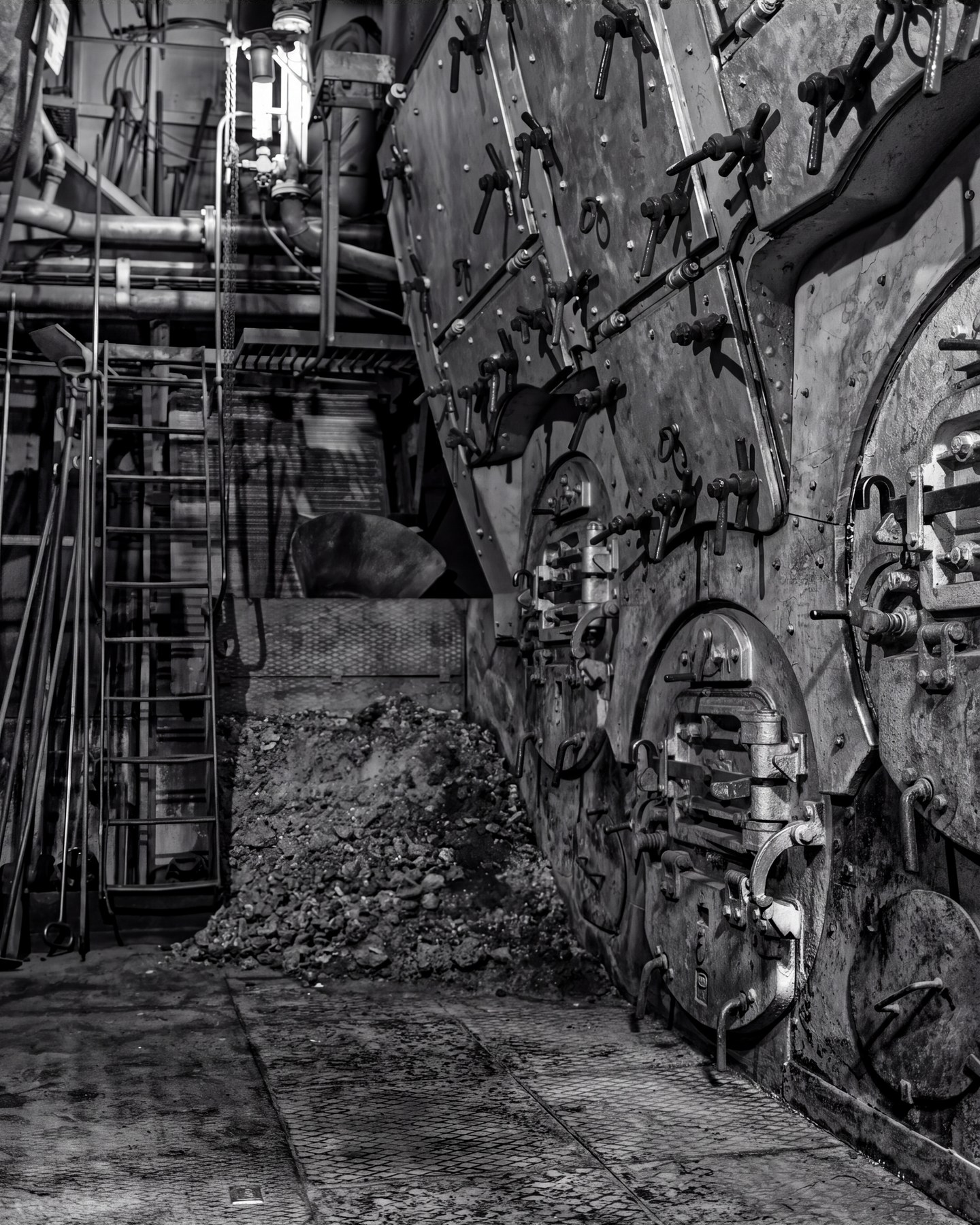
Plate 1 · StokeholdHamburg 2026
Boiler fronts and the coal pile. Firing was done by hand, shovel by shovel.
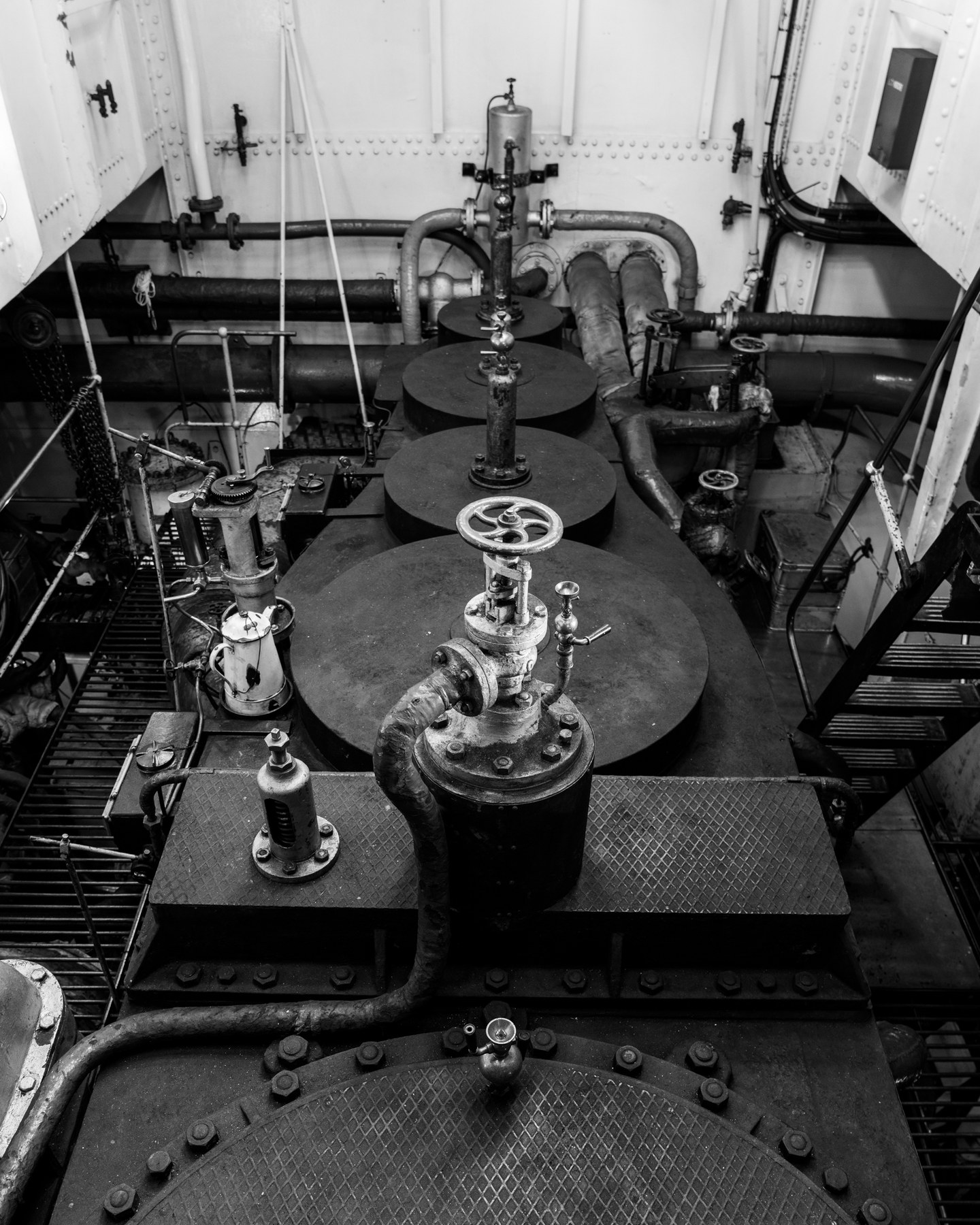
Plate 2 · Cylinder HeadsHamburg 2026
The high-, intermediate- and low-pressure cylinders in line, from the upper grating.
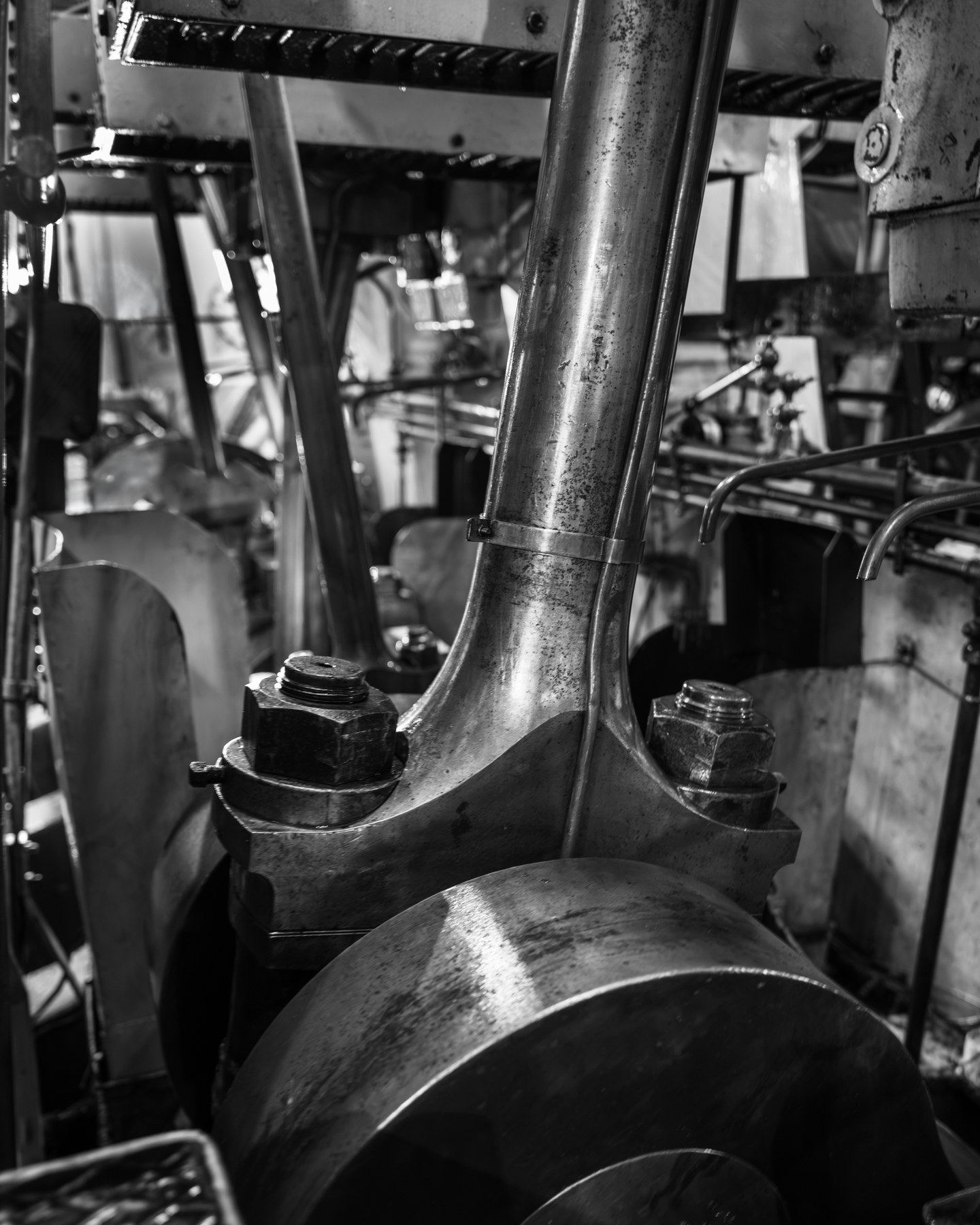
Plate 3 · Connecting RodHamburg 2026
The big end and crank, where the work of the steam becomes rotation.
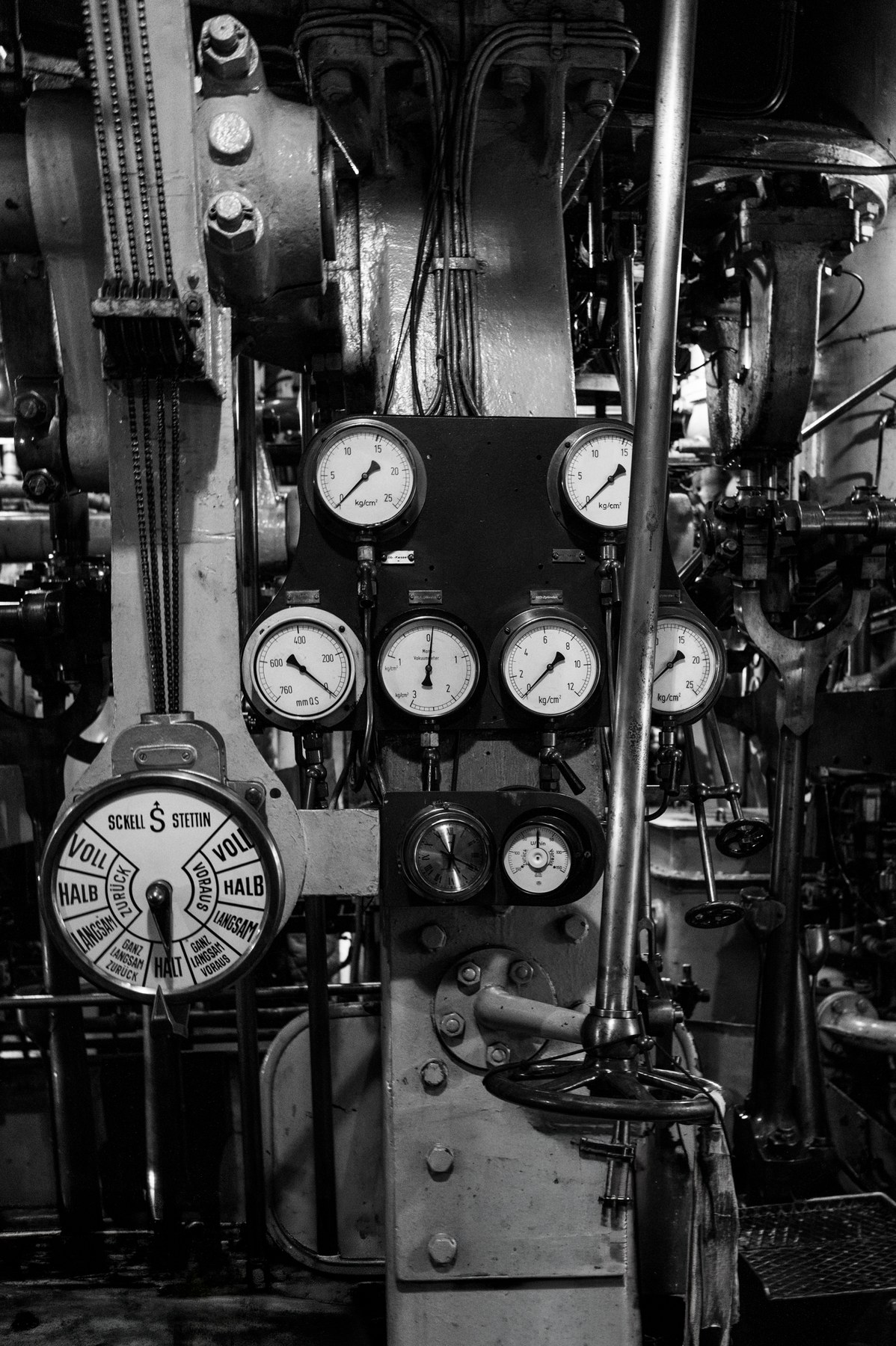
Plate 4 · Control StationHamburg 2026
Engine telegraph by Sckell of Stettin, pressure and vacuum gauges, revolution counter and reversing wheel. The telegraph stands at HALT.
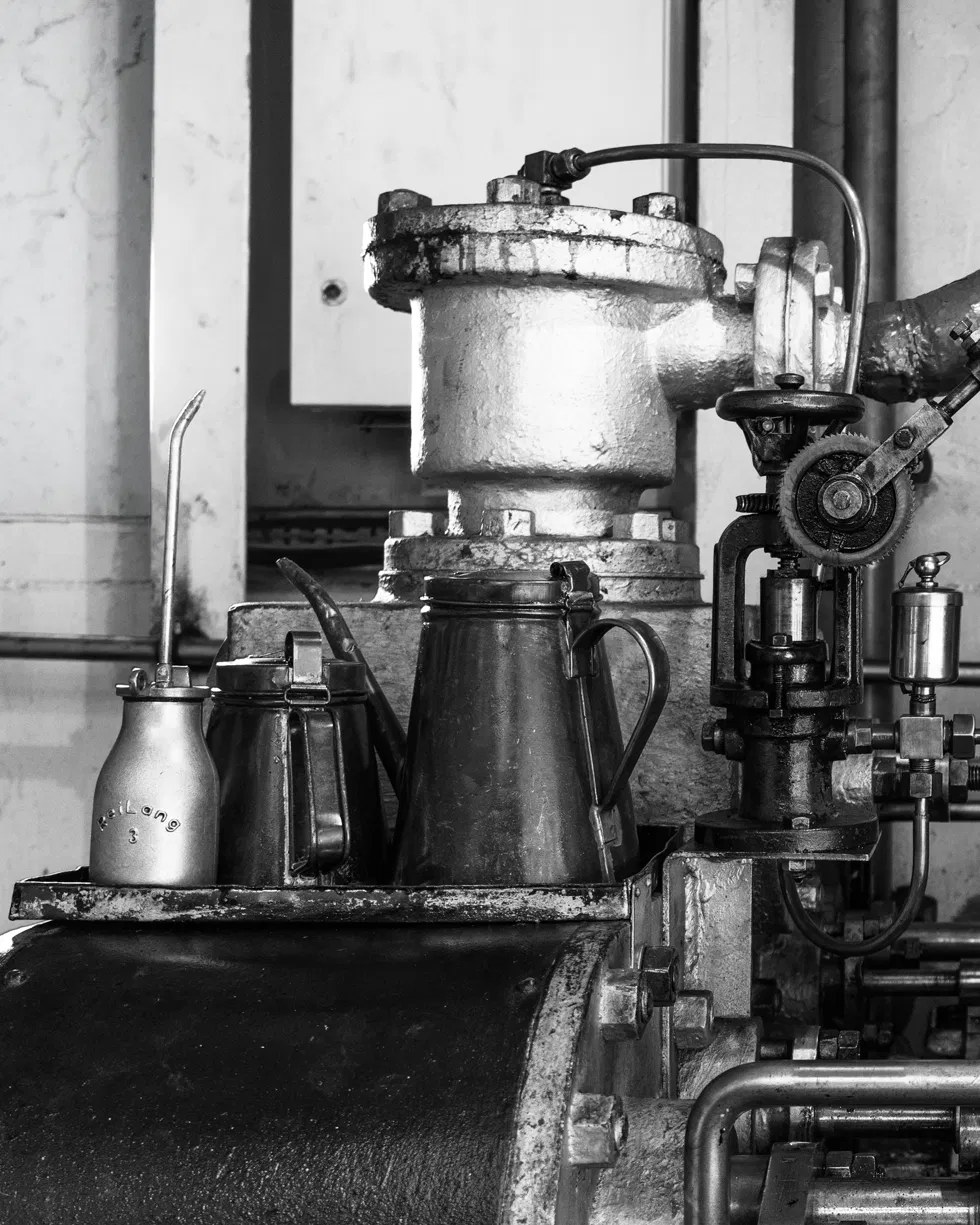
Plate 5 · Oil CansHamburg 2026
Hand lubrication at the auxiliary engine.
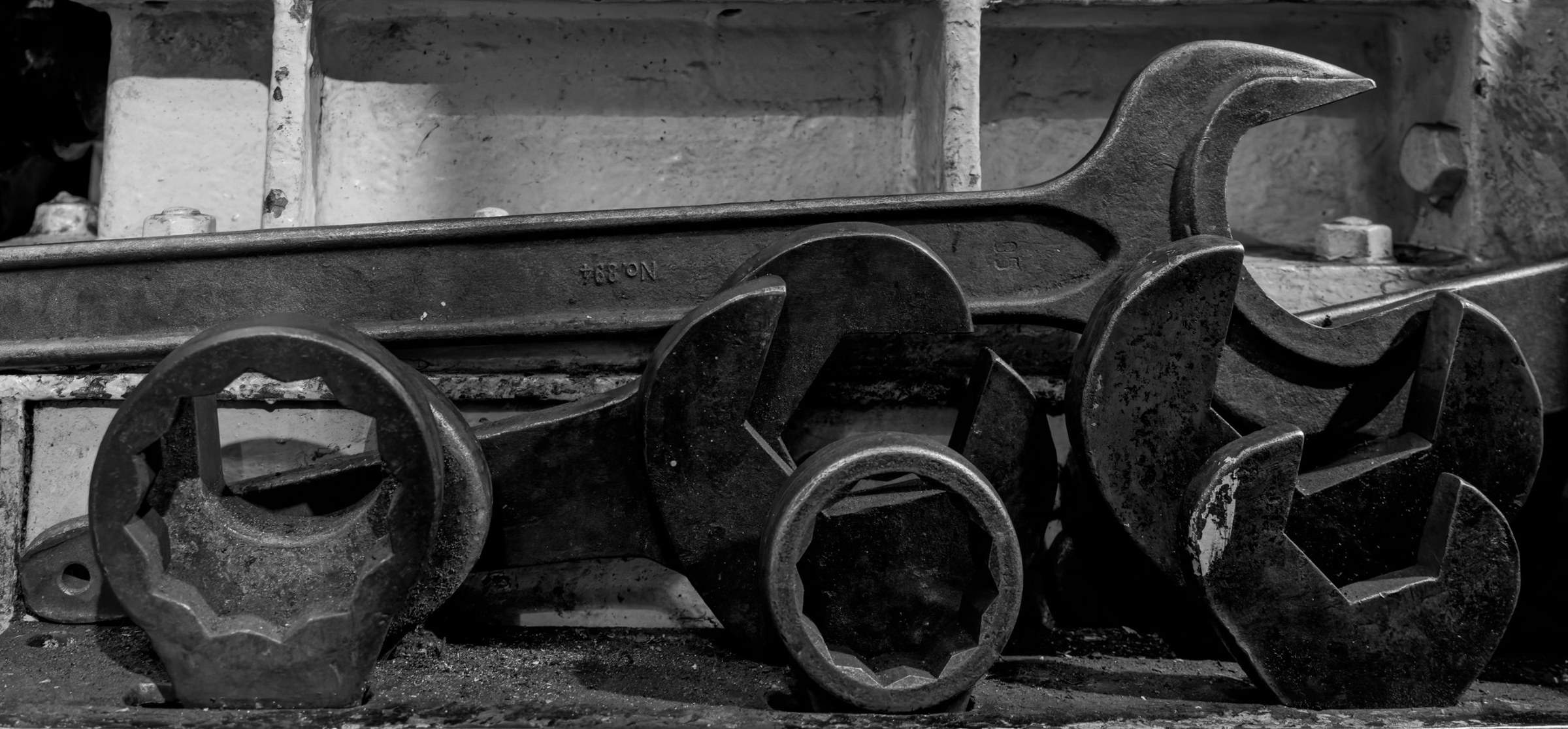
Plate 6 · Spanners, No. 894Hamburg 2026
Forged spanners sized for the engine’s fastenings, and for the force a person had to put through them.